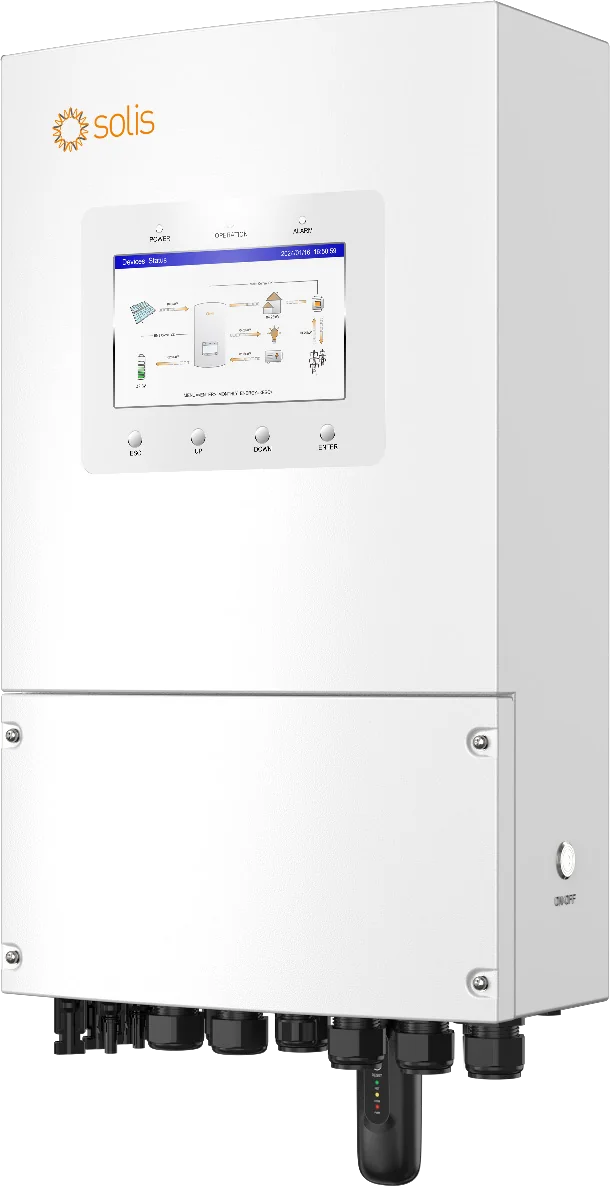
Solis S6-EH1P10K-L-PLUS(21A) (10 kW)
Brand: Solis
10 kW single-phase low-voltage hybrid inverter. Recommended PV array up to 20 kW; maximum usable PV input 16 kW. 40–60 V battery, 210 A maximum charge/discharge, 2 MPPT / 4 strings, 21 A per DC input, generator input and <10 ms backup switching.
Key features
- 10 kW single-phase output
- 20 kW recommended PV / 16 kW usable input
- 210 A battery current
- 2 MPPT / 4 strings · 21 A per input
- <10 ms backup · IP66
Technical specifications
| Exact model | S6-EH1P10K-L-PLUS(21A) |
| Rated AC grid / backup output | 10 kW, single-phase (220 / 230 V) |
| Recommended maximum PV array size | 20 kW (panel nameplate) |
| Maximum usable PV input power | 16 kW |
| PV input | 2 MPPT / up to 4 strings; 500 V maximum; 90–435 V MPPT range |
| Maximum current per DC input | 21 A (42 A / 42 A per MPPT) |
| Battery voltage / type | 40–60 V; lithium-ion or lead-acid (verify battery and BMS protocol) |
| Maximum battery charge / discharge current | 210 A |
| Battery communication | CAN / RS485 |
| Back-up switch time | < 10 ms |
| Ingress protection | IP66 |
| Generator | Dedicated generator input; configure to site supply |
| Parallel expansion | Up to 6 units (per Solis global series flyer; confirm site configuration and transfer times) |
Compatible products
Power Conversion
Solis S6-EH1P6K-L-PLUS (6 kW)
6 kW Solis single-phase option for a different measured load; compare PV and battery current limits before choosing.
Power Conversion
Solis S6-EH1P8K-L-PLUS (8 kW)
8 kW Solis single-phase option for a different measured load; compare PV and battery current limits before choosing.
Energy Storage
GSL 10.24kWh Wall-Mount Battery
40–60 V-class storage candidate; verify supported CAN/RS485 BMS protocol and current capability for this exact configuration.
Energy Storage
GSL Power Tower 16kWh
Higher-capacity low-voltage storage candidate for extended backup; confirm current limits and communication before installation.
Energy Generation
LONGi Hi-MO X10 Explorer 625–645W
Panel option for a properly sized PV design; verify string voltage and input current first.
Why the Solis S6-EH1P10K-L-PLUS(21A) (10 kW) works in Lebanon
The Solis S6-EH1P10K-L-PLUS(21A) is a 10 kW single-phase, low-voltage hybrid inverter for homes and single-phase businesses balancing solar generation, battery backup and a variable EDL supply. Its dedicated generator input gives the installer another way to manage longer outages without relying only on the battery.
Solis recommends a maximum 20 kW PV array for this model, but its maximum usable PV input power is 16 kW. Those are different ratings: panel nameplate capacity is not continuous power the inverter can process. Our team sizes strings and protections against the inverter's voltage and current limits as well as your actual roof layout.
The 40–60 V battery port accepts lithium-ion or lead-acid battery types, subject to the specific battery's discharge current, capacity and communication requirements. We verify CAN/RS485 BMS protocol support and current limits before specifying a battery; a matching voltage alone does not guarantee a working pairing.
Best for
Large single-phase homes and shops
Sites whose measured simultaneous loads call for up to 10 kW of rated single-phase AC output, with the battery sized for the desired backup hours.
Split roof sections
Two independent MPPTs and up to 4 PV input strings let the installer plan arrays on different roof orientations within the documented electrical limits.
Frequent EDL interruptions
Hybrid backup with a manufacturer-stated switch time of < 10 ms, when installed and configured for supported backup loads.
Common questions before buying
Start with simultaneous demand
The 10 kW rating is continuous AC output, not battery energy capacity. Add the appliances that may run together, then consider start-up surges and decide which circuits must remain on during an EDL cut.
Design the PV strings
The 20 kW recommended array rating and 16 kW usable input rating serve different purposes. Use the roof's orientation, panel voltage at cold conditions, MPPT window and available 4 strings to determine a safe layout.
Size storage for the outage
Backup hours depend on usable battery energy and the loads you keep on. Check battery continuous current against the inverter's 210 A maximum and verify the intended BMS communication before ordering.
Plan grid and generator behaviour
Decide which circuits belong on backup and when the generator should charge the battery. This model's documented < 10 ms backup switch time and IP66 enclosure rating do not replace correct protection, wiring or commissioning.
Installation & warranty
Nakhoul Solar sizes the S6-EH1P10K-L-PLUS(21A) to your measured load and backup hours, checks PV strings against the 500 V ceiling and MPPT range, and selects battery capacity and protection for up to 210 A inverter-side charge/discharge. Our team confirms the specific battery BMS protocol, configures the generator input and backup circuits, and commissions the system on site. Manufacturer warranty terms are confirmed at quotation.
Why buy from Nakhoul Solar
Frequently asked questions
Is the Solis S6-EH1P10K-L-PLUS(21A) three-phase?+
No. It is a 10 kW single-phase hybrid inverter with 220 / 230 V AC output and a 40–60 V low-voltage battery connection.
Can I connect a 20 kW solar array and use all of it at once?+
The recommended maximum PV array size is 20 kW of panel nameplate capacity, but the maximum usable PV input power is 16 kW. Array layout, conditions and string limits affect actual production.
Will it work with my existing battery?+
Not automatically. The inverter supports 40–60 V lithium-ion and lead-acid batteries, but the battery must also meet the 210 A inverter current limit as configured and any required CAN/RS485 BMS protocol. We check the exact battery model first.
Does it support a generator and parallel expansion?+
Yes, the Solis series documents generator input and up to six units in parallel. The global flyer states <20 ms switchover for parallel systems; the single-inverter backup time above should not be assumed for a parallel setup. The installation must be designed for the generator, phase and load arrangement.