
GSL Energy + Deye: Real Solar Installation in Lebanon
Case study from Zouk Mosbeh (Keserwan): a Deye 6 kW single-phase hybrid inverter paired with two GSL 10.24 kWh wall batteries (20.48 kWh total) — the equipment and commissioning checks.
The installation at a glance
- Location: Zouk Mosbeh, Keserwan, Lebanon.
- Inverter: Deye 6 kW single-phase hybrid inverter (48 V battery class).
- Batteries: two GSL Energy 10.24 kWh wall-mounted LiFePO4 batteries, 51.2 V nominal; 20.48 kWh total nominal energy.
- Application: home backup through EDL cuts, solar self-consumption by day, generator only as a last resort.
- Scope: supply, mounting, DC and AC wiring, BMS communication setup, monitoring and handover by Nakhoul Solar.
Every number in this article comes from the equipment we supplied and the manufacturers' documentation we hold — no estimated savings, no invented specifications.
The system that was installed
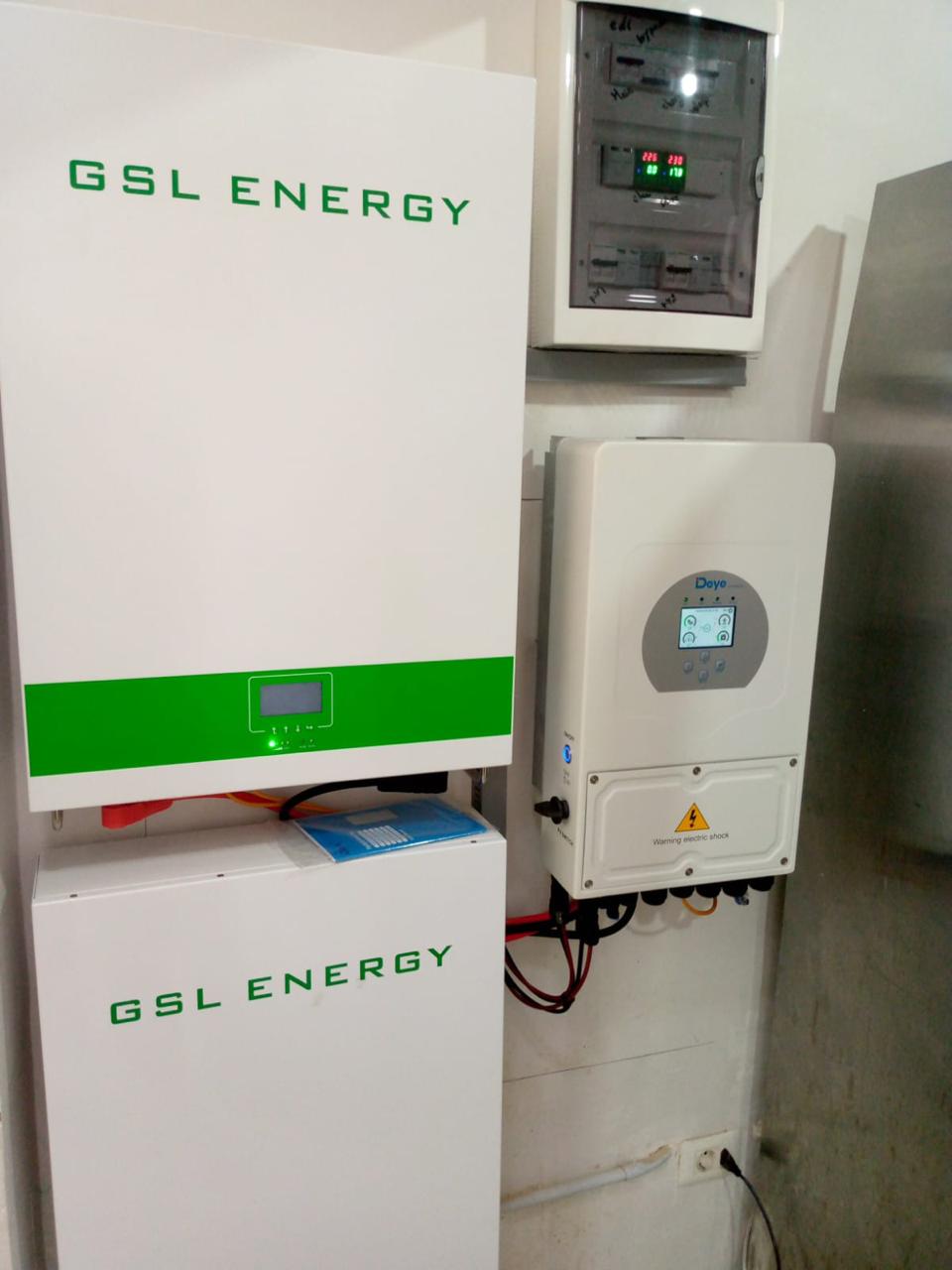
The system uses two GSL Energy 10.24 kWh wall batteries at 51.2 V nominal, paired in parallel with a Deye 6 kW single-phase hybrid inverter. Their combined nominal energy is 2 × 10.24 = 20.48 kWh. The exact Deye model suffix has not been confirmed; no model-specific claim is made here.
The wall battery datasheet identifies model GSL051200A-B-GBP2, which appears in Deye's Approved Battery List DY-LV48-0132. See the GSL manufacturer datasheet and our compatibility guide for model, firmware and current-limit checks.
Why this combination was chosen
The homeowner's brief is the same one we hear across the coast between Jounieh and Keserwan: EDL supplies a few hours a day, the generator bill keeps rising, and the loads that matter in the evening — fridge, lighting, internet, fans or one split AC — must not drop.
The installation combines a 6 kW hybrid inverter with 20.48 kWh of nominal storage. Backup duration depends on the actual loads, usable discharge setting, starting charge and conversion losses; nominal capacity is not a guaranteed overnight runtime.
How we installed it
1. Site survey and sizing
We checked the available indoor space, the cable route from the array and the DB, and the daily load profile, then confirmed the inverter's configured battery current against the two wall batteries' charge and discharge limits.
2. Mounting and DC wiring
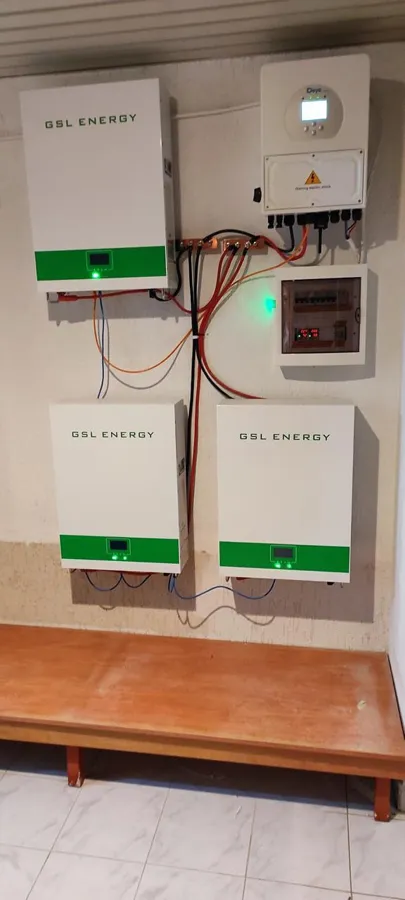
The original photo shows the Deye inverter beside two GSL wall batteries. DC power cabling and protection must be rated for the bank and inverter current; mounting and communication follow the manufacturers' instructions.
3. BMS communication
A communication cable links the GSL battery's BMS to the inverter's battery port. The inverter's battery type is set to lithium with the matching BMS protocol, so it reads state of charge and current limits from the battery instead of estimating them from voltage.
4. Commissioning and handover
Before energising we verified polarity, breaker ratings and the communication link; on site we confirmed the battery's data appears on the inverter display, set charge and discharge limits, configured EDL and generator charging priorities, and walked the owner through the display and the monitoring app.
What the system does day to day
During the day the array charges the battery and feeds the house. When EDL is present, the inverter tops the battery up from the grid on the schedule the owner chose. When EDL drops, the loads transfer to solar and battery without a noticeable interruption, and the generator is only called on when the battery is low and there is no sun.
That is the practical difference between a compatible pairing and a battery that is merely connected: the inverter follows the battery's live data, so state of charge on the display is real, the low-voltage cutoff happens where the BMS wants it, and the cells are not stressed by guessed limits.
The checks we make before any GSL + Deye pairing
This install passed the same four checks we apply to every one:
- Voltage class — a 51.2 V low-voltage battery on a low-voltage Deye hybrid, never on a high-voltage model.
- Current limits — the bank's rated charge/discharge current covers the inverter's maximum battery current.
- Protocol and firmware — the correct lithium BMS protocol selected, with firmware confirmed on both sides.
- Cabling and protection — correctly sized DC cables, a rated DC breaker, and a communication cable wired to the documented pin-out.
The full list, with the manufacturers' documents, is on our GSL and Deye compatibility guide, and the commercial documents (GSL distributorship and the Deye authorization certificate) are on the certificates page.
Some more GSL Energy + Deye installations by Nakhoul Solar
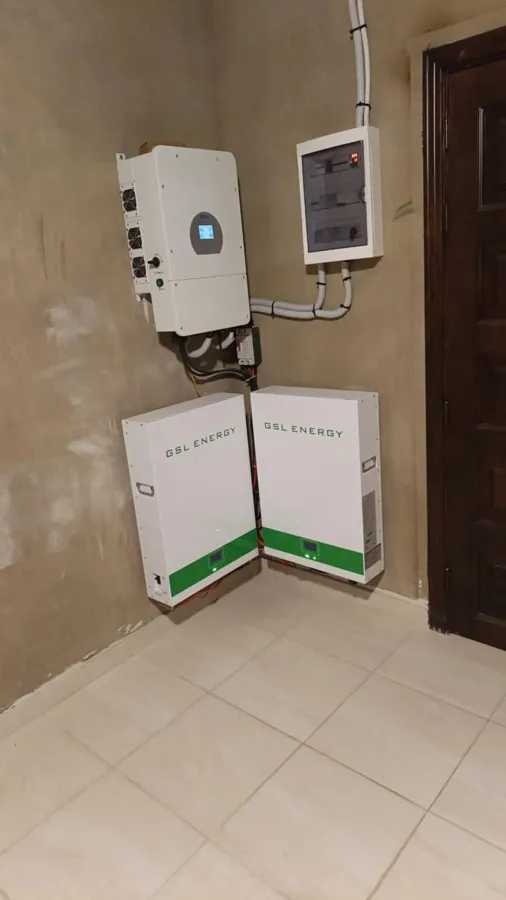
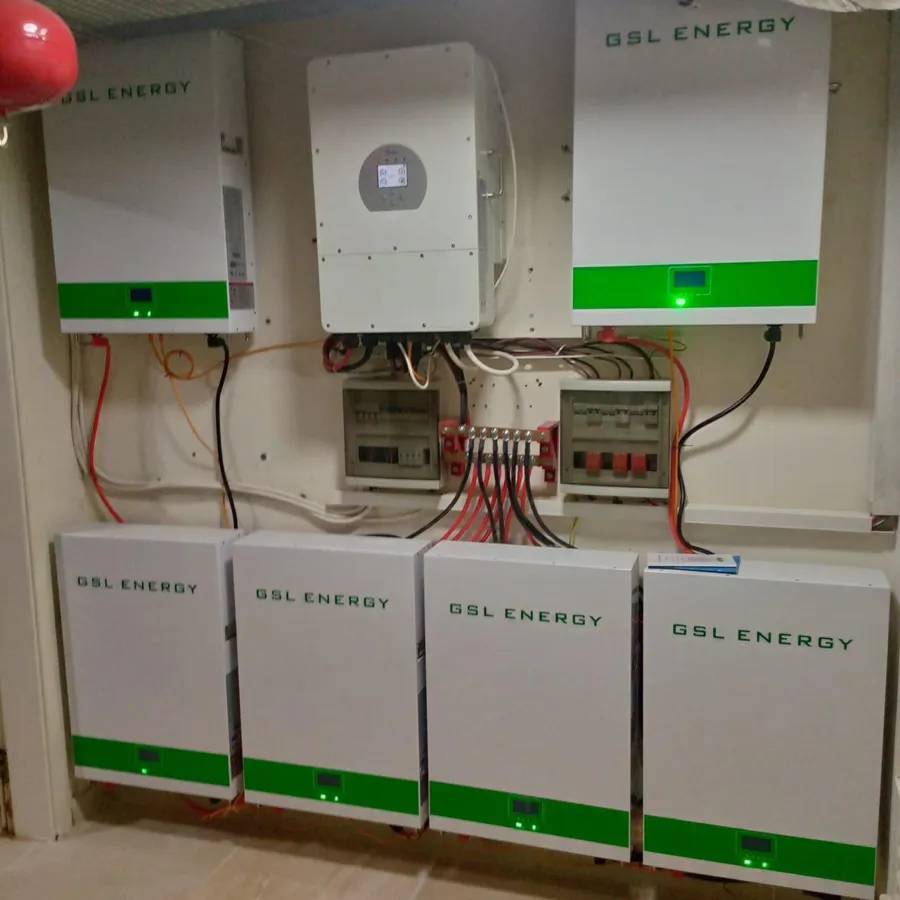
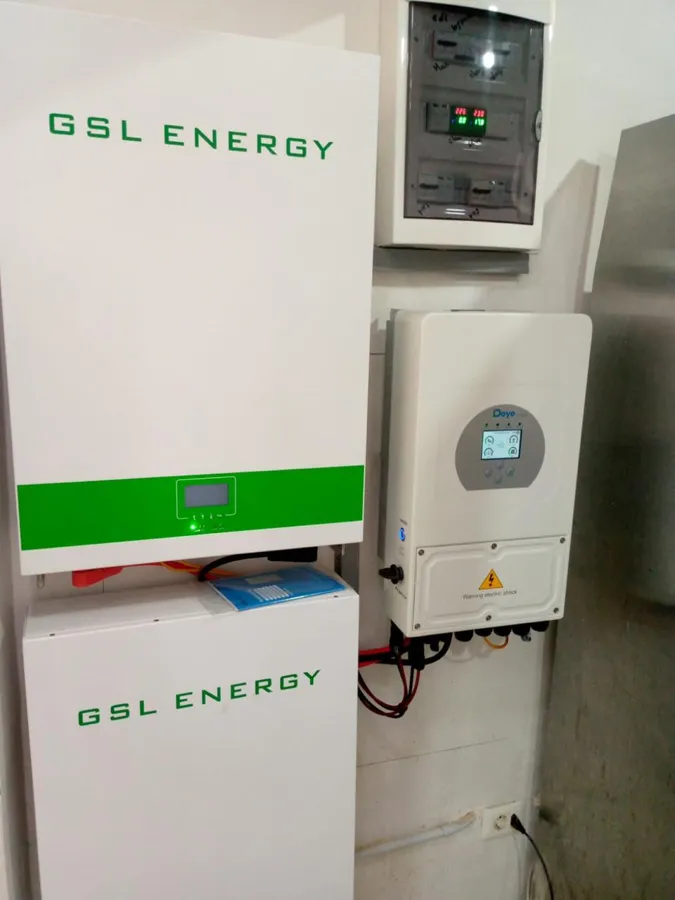
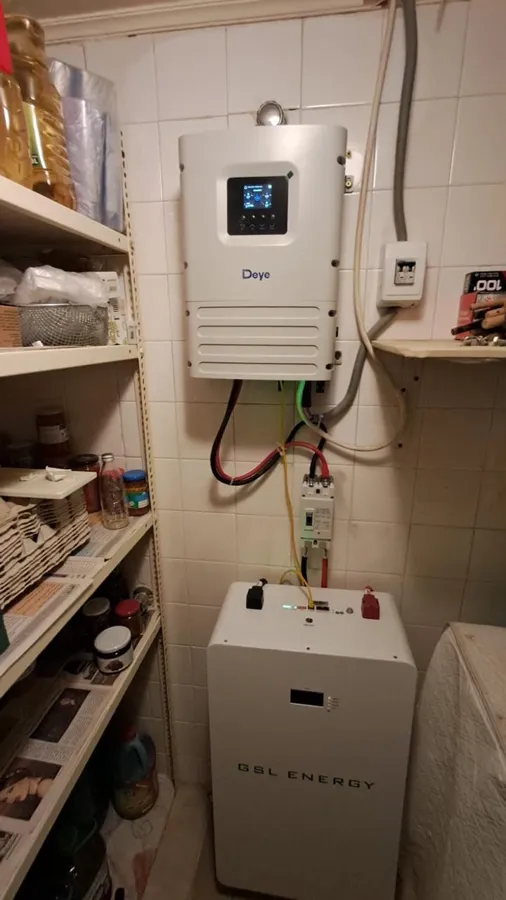
A small sample of the homes and businesses we have commissioned on this pairing — not a full list. Wall batteries, rack banks and Power Towers:
Is this the right system for you?
If you already have a Deye hybrid inverter, send us a photo of its model label and we will tell you whether a GSL Power Tower or wall battery suits it, how many modules you need and what the wiring will look like. If you are starting from scratch, we design the array, inverter and battery together.
Browse GSL Energy batteries, Deye hybrid inverters or our solar installation services, and see the GSL vs Deye battery comparison if you are still choosing.
تركيب GSL Energy + Deye في لبنان
تركيب فعلي في زوق مصبح (كسروان): انفرتر Deye هجين بقدرة 6 كيلوواط أحادي الطور مع بطاريتين جداريتين من GSL Energy، سعة كل منهما 10.24 كيلوواط ساعة بجهد اسمي 51.2 فولت، أي 20.48 كيلوواط ساعة إجمالاً. مدة التشغيل تعتمد على الأحمال وحالة الشحن وحدود التفريغ والفواقد؛ رقم طراز الانفرتر الكامل غير مؤكد.
قبل التشغيل نتحقق من فئة الجهد (بطارية 48 فولت على انفرتر منخفض الجهد)، ومن حدود تيار الشحن والتفريغ مقابل أقصى تيار بطارية في الانفرتر، ومن بروتوكول اتصال نظام إدارة البطارية (BMS) وإصدار البرنامج، ومن كابلات التيار المستمر والقاطع المخصص. بعدها تظهر بيانات البطارية على شاشة الانفرتر ويعمل النظام بتحويل سلس بين الشبكة والبطارية والمولد.
للتحقق من توافق نظامك، أرسل صورة ملصق طراز الانفرتر عبر واتساب على +961 70 707 016.
Want us to check your system?
Ask on WhatsApp